I was sitting in my cabin off senator highway at around sunset, thinking through my options, which I felt were two: the first, the more reasonable option, was to cook some rice and vegetables, drink some milk and water, and relax, write down a few tips for packing light. I was going to give a lesson on packing light for a backpacking trip early the next morning, a skill I had never given a conscious thought to. The second, the unreasonable option, was to pour some cereal, brew a pot of coffee, and head down for a Friday night on the town, where there would be music and dancing. After using all the reason and logic I possessed, I chose the latter.
I drove down to The Raven and sat outside, listening to a solo guitarist play the blues. Like Audria, friend and classmate, I also enjoy playing the observer role at times. I thought about how there’s so much music written out of a feeling of great sadness that gives its listeners such joy. I thought about what separates joy and sadness and whether they are separate at all. Sadness is often seen as a heavy, burdensome feeling, like a 50 pound pack, while joy is thought of as a light feeling, like a 10 pound pack. Where joy is burdens are not. Sitting there, I couldn’t help feeling that deep, heavy sadness and light joy are closer than they often appear.
A man I assumed to be homeless stood next to his bike beside me outside The Raven. Perhaps all he owned was on the back of that bike. He was carrying his burden, riding his way through. I could see that what he felt was much more than the sadness in his eyes. I could perceive that the discernible sadness included a less obvious joy that just needed an outlet. It was the suppression of the joy that led to the expression of the sadness. Maybe what kills us in the end, I thought, is not being without any joy in our hearts but keeping the joy down for too long within until it get too deep to express.
Part of going to the wilderness is to feel, not solely joy, not solely melancholy, but the full range of human emotion. Feel deeply, authentically. To feel and be human again. Carrying a heavy pack may numb us of what we could feel, may lead us into dwelling so much on our physical burdens that we do not feel that full spectrum. Packing light does not mean that we will not be free of all our burdens, but maybe it will help us to express that heavy burden as well as the light joy.
The guitarist in The Raven started playing a song originally written by Bob Dylan, Girl From the North Country. The first verse of the song goes:
When you travel to the north country fair
When the wind hits heavy on the borderline
Remember me to one lives there
For she once was a true friend of mine
This yearning for something, someone, once here, now gone away.
Once a part of your life, still a part of your life, but you not a part of her life. Though out of reach, out of touch, she is still kept in mind.
And maybe that yearning for the woman who left is a yearning for more than the woman. Maybe that woman is a symbol of all that is lost or almost lost, more than a lost love, but a lost opportunity, possibility, a lost home. Maybe the yearning for the woman from up north is also the yearning for the wilderness, that vast wilderness up north in the Gates of the Arctic, the wilderness where we can find direction, not towards north or south or east or west, but in a way that transcends the human practical definition of direction. Here we walk not east towards Mecca or west towards California or north to the Last Frontier or south to some Eldorado. Here we walk not towards some Utopia, where we can build the perfect form of civilization, but in a present reality that we will not allow to become a past glory, where we can stop for a second in the stillness and say: here, I feel something that I do not feel in any technological paradise, in any urban dream. Here is no dream, no unreal paradise. Here is the real, what has been here before us and what must remain after us. Here we can find a meaning to all our endless wanderings and yearnings. Though we may have searched for a long time in the wrong places and found only disillusionment, here is the right place, which validates the yearning and redeems it. And maybe that’s why the desire to preserve it is so strong.
The wilderness, what used to be our home. Once here, now almost gone.
A quiet morning at the lookout tower on Spruce Mountain. The woman who womans the fire lookout is apparently named Suzie. She isn’t here today. Regardless of her age, she is attractive to me, purely because of her choice of occupation. And even though I haven’t gone up to the actual tower to meet her, I did sit below for a time one day reading. That day I had been considering whether or not I wanted to intrude on her solitude for a good fifteen minutes when an older man started walking up the stairs. I hadn’t even noticed he was close by. You enter the tower from below; the door opens in. When Suzie heard someone coming up, she opened the door and the man walked on in. I headed back down the trail, back towards the trailhead. It was good that I hadn’t gone up to the tower, I thought. It wouldn’t be right if I had gone up on a day when another person had gone up. This was the thought that came to me on the way down.
A clear morning today, clear and quiet and not too warm. I’ve hiked this trail for the 5 days prior to this, twice doing the 9 mile loop, the other three times going down the same steep, 3.5 mile section I had come up. The first day was when the rest of my family was here, the other 5 times including today I’ve done it alone. Although I don’t usually like to go the same way on the return hike, I like the 3.5 mile part on the way up because it’s steeper and on the way down because it’s shorter. Short and steep is my ideal hike.
Just the birds, the flies, and me up here today. So far I haven’t woken up early enough to get up here by sunrise. That’ll be my daily goal once school starts. Even if the rest of the day gives you nothing to celebrate, to be up at 8,000 feet at sunrise is an achievement, something to give the day some value, to redeem it before it needs redeeming, liberate you before you need to be liberated. The rest of the day can go as it goes, can leave you unfulfilled, wanting, yearning, lonely, hungry, exhausted. Just let this moment be, up at the top of the mountain, having risen with the sun, fulfilled by forgetting what does not need to be remembered and remembering what cannot be forgotten. Not lonely, wanting no more than this, revitalized by physical exertion and natural beauty.
I hear someone hiking and quickly get dressed. I had been indulging in some simple animal pleasure, sitting naked on the granite in the sun. I thought I’d have the tower all to myself this morning. Ah well, a selfish desire, no doubt. The hiker doesn’t come all the way up; he sits on a rock a little ways down and takes out his binocs to watch birds. He must want some solitude as well. Not everyone wants it, perhaps not everyone needs it. Some need it more than they want it, some want more of it than they need, sometimes I want it too much, seek it too often and don’t like it as much when I get it as I thought I would.
Those are the times I seek it to distance myself from others rather than to connect with my true essence and thus bridge the gap between others and myself. The times when I need it to get away and evade rather than to meet and come towards; when I need it to avoid pain, ignore conflict and division, forget, rather than to face the pain, understand the division, remember; when I need it to escape feelings of alienation and separateness, rather than to feel more intensely the inalienable aloneness which, when felt fully, does not separate but rather connects me to all who go alone by free choice, who know no other way to truly rejoice, who find joy in the most complete, undeniable sense when by themselves, joy which does not do away with sorrow, joy which includes a sweet melancholy because of the awareness of its passing.
The knowledge that it will fade, far from detracting from the joy, adds to it, lets the man or woman more completely enjoy the solitude. Like the truth of sadness lying beyond and beneath the pleasure of lover above lover, the melancholy attaches to without detracting from the joy of the hour of solitude. Somewhere there is the knowledge that you will feel the alienation again, that your head will again be filled with unnecessary burdens you wish you could forget while somewhere below a vague intimation of your essential essence floats unseen, sinks unconscious.
I let the flies land on my legs, my feet, my thighs. I discourage them from going further, as the other hiker has gone down and I am now back to my natural state. When that essence starts to become a dim memory rather than a daily experienced reality, it becomes more difficult to let the flies land, let other people near. Unlike the flies who are harmless, other people, I think to myself, suck my energy, drain me of me until I am not sure of anything least of all that indistinct thing I call my self. Is it they who drain me, though, or I who do not have the power to resist being drained, maimed? Why among others can I not be the man I am alone? The more the essence is forgotten, the more the questions refer back, centering on its search, dismissing what does not lead directly to its rediscovery. Now the thought is: Instead of being drained, passive, better to go on the offensive, get active. So you try and prove to others your worth instead of acting from an internal sense of self-worth. In trying to prove that you have more than nibbling worth, you start to feel a gnawing sense of worthlessness. Looking for some external reward, some sign you’ve made it in the world, you resign yourself to feeling inwardly empty, unable to stand the sight of yourself alone. You work harder for recognition. Others must recognize your greatness. You are special, unique, unlike them.
Ah, how quickly is the fall from individual essence to societal menace! There is a fence around you now, but you have grown blind to it, it is visible only to others; there is condescension in your eyes, a defiant willfulness in your furrowed brow. Perhaps it is better never to realize any depth in yourself than to grasp it only for a moment while the rest of your life you feel both worse than and superior to everyone else. You can’t reach for the heights without sinking to the depths, can’t have the one without the other.
Well now, let’s try a different tactic. Instead of trying to force others into a recognition of your unique brilliance, instead of filling your hours with useless thoughts of how you are hopelessly misunderstood, couldn’t you spare a few hopeful thoughts in trying to understand others, understanding yourself through relationship with others? A novel idea. Realizing that your uniqueness, though not an illusion, not a terminal uniqueness, realizing that this life-giving, self-creating uniqueness, since true in yourself must be no less true in others, couldn’t you try, instead of feeling drained by piercing and insensitive eyes, pierce through to the sensitive, unique soul of another? Seeing the one, can’t you see there is no other?
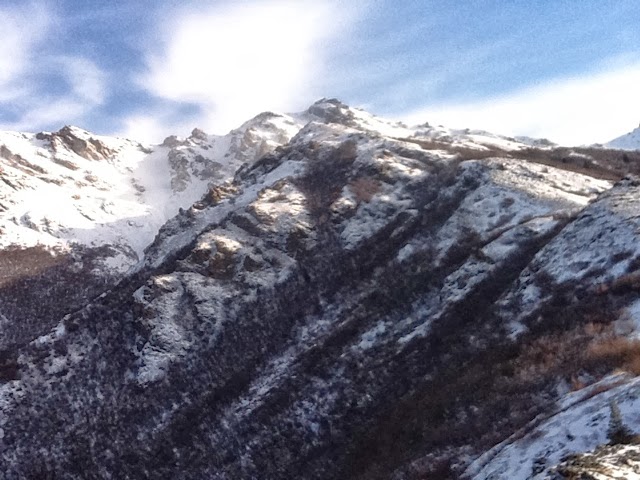
I changed into my green pants, perfect for climbing and scrambling, comfortable and light. The legs when moving always stay warm regardless of weather. Almost always, that is. They would certainly be cold in about an hour and a half. And another, more sensitive member above the legs most emphatically would not stay at all warm. There was no trail. Branches scraped me, roots tripped me, I continued cheerfully up. About 500 vertical feet above the road, there was some snow. 500 feet above that, the snow covered the ground and I sank into it with each step, knee deep at times. Still the legs stayed warm, since they were moving upward on a steep slope. After pushing my way through the forested portion filled with trees 10 to 15 feet high, I made it to a clearing. I predictably and naively had thought this clearing was the top from the bottom. Not even close, as I should have known. And here the wind came back. The trees had partially sheltered me before. Now I felt the full force and power of the wind at my back. Not a kindly tropical zephyr wind, but an angry arctic indisputably wintry wind.
Angry? An angry wind? It seems to me, the professor of anthropology says with a decidedly learned air, that you are giving a human quality to a inhuman force. Personification, if you will. Anthropomorphism, if you’d prefer to give it a more academic ring. A solid point, professor, sir. I will try to elaborate, for your sake and for mine, if I can. I do not mean to attempt to describe the indescribable, to give human emotion to what is inhuman and unemotional. I hope that my words do not detract from the mother who is forever silent, for silence is always superior to speech, but if possible add to her, to her grace, to her silence. No, that’s not it, not add to her, that cannot be done. What is unconstructed, what is wild, cannot be improved upon by man. Man can only destroy it or respect it. If he respects it, he does not alter it. No, not to add to her, but maybe to open people and myself to the silence of nature, which is only ever a stillness and never a silence, as well as the silence that lies within us; within you, professor of anthropology, and within me. The wind, though it might not have been angry in the sense you and I mean it, was certainly not silent. And if there was anger, it was not senseless. Senseless anger is solely a human quality.
So perhaps there was a reason for it, though it seemed unreasonably fierce, perhaps the winds were righteously angry, and their anger was such as cannot be harnessed, beyond the ability of humans to control. Uncontrollable. The dog may be able to be tamed, but woe to the man who attempts to tame the wolf. Woe to the man who attempts to control the uncontrollable, harness the unharness-able, tame the untamable. Woe to the man who looks at the wild river and thinks only of the cash that could come from damming it, who looks at the mountain to wonder what minerals might lie within it, who sees the forest as lumber, to whose eyes nothing is beautiful but what is profitable. Woe to that man, woe to those men who manhandle what should only ever be handled gently, or not at all. So to conclude, professor of anthropology, that’s the type of anger I’m talking about, the anger of the winds, or at least the anger I attributed to the winds.
The thing is, though I said the winds were angry, this is not true. Nature is indifferent, the sun does not care who it burns, the cold night does not care who it freezes, but Nature is never hostile or vengeful, as long as we change ourselves for the land and not the other way around. So-called civilized people change the land to suit their interests, bulldozing forests to build high-rise apartment complexes, making concrete roads and sidewalks where there ought to be fields of high uncut grass. The “uncivilized,” the “savage,” before whites came with reservations and forced assimilation, never changed the land for his own interest, he changed himself to suit the land. If the land was harsh and uncompromising, the uncivilized Navajo or Eskimo with no desire for civilization did not try to mold the land. Instead, he worked with the land, eating what food was provided, living where there was natural shelter or using natural materials to build a shelter. He realized that all a shelter needed to do was keep its inhabitants dry. Warmth came with the fire. Luxury was unknown. Those in touch with inhuman Nature realize sooner or later that human nature does not fit in with her scheme. Human nature is not natural.
While Nature is indifferent to the plight of its inhabitants, whether they are cold or hot, whether they are unhappy or happy, civilization keeps some people warm and comfortable while it lets others freeze, it keeps some people well-fed enough so that they can convince themselves they are happy, while it lets others starve. Prejudiced hostility rather than indifferent neutrality. Nature is indifferent, but it is also neutral. Whites are rocked by the earthquake the same as blacks. People from Louisiana are no more protected from the hurricane than people from New Jersey. Nature, in its unprejudiced indifference, is a leveler of all people, the master socialist.
Warren Zevon, from “The Indifference of Heaven”:
“Gentle rain falls on me
And all life folds back into the sea
We contemplate eternity
Beneath the vast indifference of heaven”
On the slope, I kept climbing up, amidst the vastness and eternity, amidst the calm indifference of Nature. It was almost easy, the wind at my back. The deep snow made slipping actually less likely; powdery snow, not wet and slippery. But the wind was cold. The air might have been in the low twenties or high teens, but the wind chill made it feel subzero. The snow began to freeze on my pants, and I hurried faster, trying to stay warm through constant movement. It worked, but I knew once I made it to the top and stopped moving, if I made it to the top, the cold would be unbearable. The last little bit was one of the steepest slopes I have ever climbed up, and I crawled on my hands and knees for balance, a low center of gravity. 4 limbs on the ground. Like a wolf, like a bear, like a tiger. I saw an eagle here, the first I’d ever seen in the wilds, circling regally over the mountains, king of the skies, seemingly unaffected by the winds. A plane flew directly above me. The path the plane made in the sky looked beautiful from this height, where nothing looked ugly, where nothing except the plane could be seen of human civilization. And nothing heard, not even the plane, which was drowned out by the winds.
Crawling, reverting to the nature of the beast, I eventually reached the top. Of course, it was not the tiptop. I could have, if it had been a day without 100 mile per hour gusts of wind (perhaps an exaggeration but I don’t think so), kept on going. Although it was a flat area, there were countless other mountains further on and up. But the wind seemed to double in velocity once I got to the top, and there was no way I could go on. I could barely take my gloves off to take a few hurried pictures. I put on my hat and pulled down my neck warmer, which had been on my head, so that only my eyes were visible. Still, I had to look down and turn my back on the wind, or else my eyes would burn from the snow the wind picked up and hurled in all directions. I could barely see, but what I could see was of such astounding beauty that tears started to come to my eyes. It was either the astounding beauty of the surrounding landscape or the snow blown by the wind that was burning my eyes or the pants freezing to my legs or my increasingly frigid penis that brought the tears to my eyes.
Probably all of them. I had to pee slightly, but I was not at all tempted to. I was truly in the sky; the mountains around me were only slightly higher than I was. I could not stay though, the wind was quite insistent on this point. I started quickly down, backwards so I wouldn’t be facing the wind. Mostly so that sensitive member I referred to earlier would not be facing the wind, as it was now quite cold and definitely confirming Costanza’s crisis. But my crisis was more severe. Cold is worse than wet, a physical rather than a Napoleonic hardship. However embarrassing wet might be when seen, said wet member can be dried and embarrassment can be forgotten, if slowly and painfully. Cold can be warmed, but not thousands of feet above the road and the car and the heat. This was real cold. Not Virginia cold, not even the Arizona high desert cold. No. This was Alaska cold. Frostbite cold.
Once I could face the wind without being pushed back several feet, I ran down, fast, the deep snow helping me not to slip and fall, though not helping to warm me, especially the one part, or unfreeze my pants from my skin. I kept running, thinking that at least it wasn’t painful now that numbness had set in. Necessity gave me speed, and I ran straight down the mountain, two thousand or so vertical feet to where there were trees. Trees and protection from wind. Even when I got to the trees, I kept running, though this was a mistake. Falling countless times into deep snow did not help to warm me. Eventually, when I had been running for about an hour, my head down the whole way to protect my eyes from the wind, I finally stopped when I noticed that there was no snow on the ground anymore and found out that I was burning up. From close to frostbite to too hot. I took off my wind jacket and put it in my pack. As I did, I noticed another blue article of clothing. Thermal pants. They had been sitting comfortably in my pack while I had been literally freezing my ass off (I had sat down on the snow once during the hike at one of the only moments when there was comparably little wind. Another mistake).
I went slowly now and found a running stream that I hadn’t seen on the way up. A few days or weeks from now it would be frozen, but now it was flowing and the sound of it was pure music, pure as only wordless music can be. I sat by the creek in an opening where the sun shined between trees. The warm sun seemed to belie the pure righteous anger of the winds, which had finally quieted down. I could hear the river below me, the creek beside me, the birds in trees above me. I couldn’t hear any cars below on the road. I sat there in the sun, on the spongy tundra. I sat there in the sun, on the side of the mountain. I sat there in the sun, leaning my back against a spruce tree, and closed my eyes.
I spent the fall before I started at Prescott living with my cousins in Kenny Lake, Alaska, 40 miles south of Glenallen and 220 miles northeast of Anchorage. I spent my time at their place chopping wood to keep warm at 30 below, doing odd jobs for neighbors, snowshoeing through the woods, reading, writing, and watching Lord of the Rings with my three younger cousins. They were three of the best months of my life. When I had worked enough odd jobs that I had money to travel, I did that. One day I decided to drive to Fairbanks.
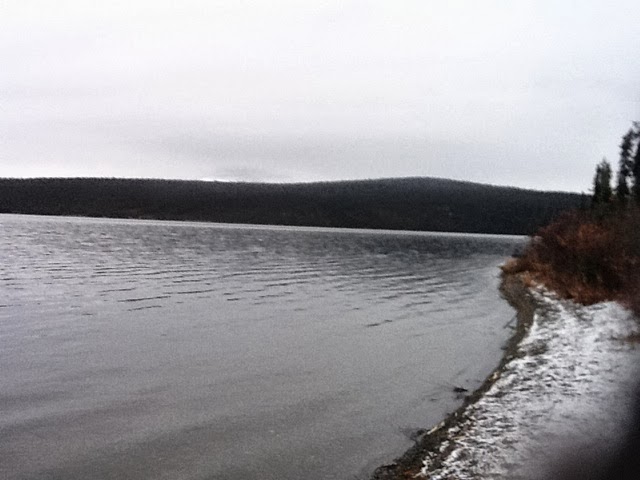
Driving from Glenallen, I wasn’t sure where I was going to stop for the night. Most campsites were closed for the winter, so I thought I would just pull off the road and sleep in the car somewhere. There was a sign for a campground by a lake, though, that looked like it might be open, at least it was not gated off, as most of the campsites were. I pulled in, drove the loop. There was not a soul in the 50 plus site campground. The lake, Paxson Lake, was run by the BLM, a governmental organization, so technically it was probably closed. This was the time of the government shutdown. But the shutdown seemed so totally irrelevant here, so far removed from this campsite by the lake, surrounded as it was by mountains and trees, that I never expected a ranger might come to kick me out. A ranger did come to kick me out, but not until the next morning, so I still was able to enjoy the stillness of the deserted campsite for the night. I set up my tent and then walked around gathering dead spruce wood for a fire. I laid the wood in a pile, took off my boots and socks, digging my bare feet into the rocky sand, and leaned back against the hard wood.
Good. Wood gathered, tent set up, fire burning. What else? Food? Why not. I cut up my quarter pound of sausage, put the pieces on a stick, and stuck the stick in the fire. Cut open a bagel and stuck it in the fire. Got my steel cup, filled it up with water, and stuck it in the fire. Waited. Leaned back against the wood, looked at the sky, darkening now. Took the sausage and bagel out. Put the roasted sausage on the toasted bagel, added some cheese which instantly melted from the heat of the bagel. Took the cup out and added a teabag. Dinner. Good. Anything else? A book? But that would require standing up, and the fire was so warm. Something of an issue, but one that could be overcome. Simply required an exertion of will. I could do that, I could stand up. I stood up, and ambled gingerly in my bare feet to the car, found a book, went back and leaned my back against the wood again. Edward Abbey would be my companion for the night. And a good companion he would be, better than many, than most, his voice truthful, passionate, alternately loud enough and silent enough to be heard. Often though the fire would distract me from his righteous and pure polemics, and I would put the book down and stare at the flames, thinking nothing, not at all oppressed by the beauty of the night, not at all lonely, but feeling liberated in the aloneness, which was not mine as loneliness would have been. Not my aloneness, but the aloneness. It had been here before I came, and it would be here after I left; I joined it, the aloneness, become a part of it, more a part of it than I would have been if I were not alone.
Unhappiness here did not make sense. The trees were happy where they were, the rocks on the shore were content that the water in the lake flow gently over them, the animals pleased to roam and find food. It made sense only to conform to the contentment of these natural living beings and life-giving forms, and it was the only type of conformity that made any sense. Part of me dreamed that life could always be this simple, this easy, and maybe it could. But perhaps, another part of me thought, it is the difficulty and monotony of everyday life that make the rare times of easy happy simplicity when there is no conflict between the inner and outer life, when there is no distinction made between the two, when you are a part of the outer and the outer is part of you, so meaningful. A pool of water in the desert wouldn’t be an oasis if the desert were filled with water.
It snowed during the night, 2 or 3 inches. I had fallen asleep by the fire and moved to my tent after the fire burned down and the cold woke me up. In the tent I slept soundly and warmly and didn’t realize it had snowed until the morning. I was in no rush to leave so I stayed in the tent and read in my sleeping bag. After an hour or so of this, I heard strange motorized sounds coming down towards the lake. I heard the strange motorized sounds stop by my tent, heard someone get out of the car and shut the door, heard someone ask if anyone was in the tent. I feigned sleep. She asked again, I answered. She was pretty nice about it.
“This campsite is closed, I’m going to have to ask you to leave. The governmental shutdown and all. You can get dressed and everything first.”
Although this ruined my plans, which consisted of staying in my sleeping bag doing nothing, it was alright. I would press forward. The Denali Highway was a few miles ahead, and perhaps not yet closed for the winter. My Uncle Peter and Aunt Patty had recommended driving on this road, which led to Denali National Park, but it was mostly unpaved and always unplowed. If it had snowed heavily during the night the road would be impassable.
At the entrance to the road, there was a sign which read “Travel Beyond This Point Not Recommended,” and a second sign which warned that wind, snow, and other perilous weather conditions were almost always present. In other words, only a fool will keep driving. More to the point, you, driving the 2003 Subaru Forester, are a fool. Do not continue, turn around, you have never driven in the snow, have you? No, of course you haven’t, which is why you consider continuing. Stop considering it. There are winds on this road which have flipped cars twice the weight of your little utility vehicle, conditions which have put the fear in drivers infinitely more experienced in the snow than you are. I listened for a minute or so to the signs, physical and otherwise, and then went beyond. There was a campsite about 20 miles away, Tangle Lakes, surely closed, that I would drive to. I’d turn around there, if I had to. On the way, I saw a caribou in the middle of the road. It paused for a few seconds and looked at the car, then turned and ran, stumbling a little. Perhaps it was hurt, hungry. I cursed myself and the noise of the car for frightening it and making it use energy to scamper up a hill, energy it might have needed to find food. I could have watched it from afar and waited until it was out of sight before continuing. As it was, I made it act other than it would have had I not been there. I changed the natural flow of things, and not for the better. When does human interference ever change things for the better?
It started snowing when I was about halfway to Tangle Lake. Not too hard, but definitely snow, not rain. Cold enough outside for it to stick. For Alaska, a minor storm. Fairly windy, snow accumulation if the pace kept up of maybe half a foot by the morning. Nothing to get worried about. In Washington, everything would be shut down. Then again, in Washington everything was already shut down, snow or shine. The governmental shutdown and all. At Tangle Lakes, I stayed in my car for about half an hour, thinking through the options, which were two. Press on or go back. West or east. Right or left. The first had the ring of adventure to it. Press on, in a general westerly direction, through snow and wind, through some of the wildest country that man has yet profaned with a road, seeking adventure. Go back? Retreat? That definitely was not adventurous. Not an attractive option. No romance to it at all. So I turned right, towards adventure, the west, towards a fair chance of fatality. The snow, as if in answer to my foolishness, immediately started to come down harder, the wind picked up. The weather report that Patty and I had looked at the day before had said that winds would be gusting at over 70 miles an hour. Travelers were forewarned. After 3 or so miles of driving under 10 miles an hour, I turned around. A couple more miles more and I might have had trouble doing even that. Later, when I returned to Kenny Lake, Peter told me that the Denali Highway had been closed for the winter that very day. I was probably the last one on the road.
Back on the main road to Fairbanks, I stopped in and got a cup of coffee at a cafe. Just to see the reaction, I asked the old man there if he thought the Denali Highway was passable. He looked at me for a second, looked outside at the snow coming down hard, and looked back at me.
“No. Not a chance. Stay on the main highway there, my friend.”
I did so, heading up to Fairbanks, 3 or so hours away, which for some reason I wanted to see. To see the difference, maybe. See how I would fare in a city for the first time in a month. I thought, mistakenly, that after a few weeks of living with my cousins away from the land hungry evil twin brothers of progress and industry, living in the shadow of some of the most majestic mountains in the world (Wrangell-St Elias Range), I might better be able to handle the brutal meaningless sounds of the town and city. And if I could not, then there was the library. I could always retreat there. There was a university with stacks and stacks of books. And there was always the car. And the road. The car on the road, departing. I could leave if I couldn’t stay. I arrived at night on Tuesday, after picking up a couple of not so reputable or respectable but nice enough hitch-hikers (one of them started singing when I put on James Brown, “Man, I haven’t listened to this since I was a kid. Do you got It’s A Man’s World?” so we sang it together.) I dropped them off so they could look for drugs and then parked my car and slept surprisingly well in the parking lot of the 24 hour Wal-Mart. Before I fell asleep I wrote a poem, just one of probably thousands of Wal-Mart parking lot poets all over the USA, down on our luck.
I stayed in Fairbanks the whole of Wednesday, mostly in the university library reading the poet Robinson Jeffers, leaving the library once to go buy some books at a used book store. Libraries and used book stores, the shining beacons of civilized life, which have saved many a wanderer, salvation for those who don’t know why they are there at all, why they aren’t climbing a mountain, riding waves in some sea, wandering in some desert. Jeffers, from the poem “De Rerum Virtue”:
“One light is left us: the beauty of things, not men;
The immense beauty of the world, not the human world.
Look—and without imagination, desire nor dream—directly
At the mountains and sea. Are they not beautiful?”
Or as the Grateful Dead put it:
“Let it be known there is a fountain
That was not made by the hands of man.”
I left early Thursday morning, left the land of men, returned to the mountains; left the dangerously hopeless dream (or nightmare), returned to the starkly beautiful reality. In the words of one young unpublished poet, I left the land of rules and returned to the land of reigning silences, left the land of fools (myself included, no less than the rest), back to the land where there are no disguises. Driving from Fairbanks, I started to feel excited, more alive. I had felt dull and lifeless in the library, though the most refined thoughts of the greatest writers this world has known sat in books all around me. Driving now, Zevon on the stereo, I switched on the cruise control and watched the sun rise in the rearview mirror over some hills (mountains in any eastern state, hills in Alaska). The sky was almost completely clear, a rarity in perhaps any part of Alaska at this time of year, though I can’t say that for certain, having not traveled over the one-thousandth part of the state. Alaska is so massive, and with such wildness, such beauty. I wanted to climb every mountain I passed. But the Alaska Range, close to Denali National Park, was about 100 miles ahead of me. I decided to park my car somewhere ahead, in the range, and, while the sun was still shining, climb until I had cleansed myself of civilization by a process of detoxification. I parked the car shortly after a sign reading Wind Area. The sign had it right; the wind was powerful, though not quite as strong as it had been on the Denali Highway. Besides, the mountains were irresistible to me. Wind or no wind, I would climb.
In Chamonix. Planning to hike the Tour of Mont Blanc, a 200-kilometer loop. Passed a hotel called Le Gite Vagabond. Tempting, but too expensive, so I slept on a bench outside the train station in the shadow of Mont Blanc instead.
I am writing you from a train filled with Aussies. Paris to Lisbon, Portugal; a long ride. I was in Paris for a day. I didn’t know what to do so I went into a movie theatre and watched Spiderman.
Dublin is as dirty a town as they claim, and as beautiful. I drank Guinness today and sang dirty old town with an old drunk. I watched cricket and noticed that cricket players are faster than baseball players.
I got to Madrid hours before my flight back to Ireland. I lay down shirtless outside the airport, as I had done in Phoenix a few months before, and did nothing. Much hotter here than it is on the coast. The temperature rises, the people get colder.
London is packed for the Olympics. My brother and I came over from Ireland to watch the Marathon. I retreated to a bookstore and read The Perks of a Wallflower and then napped in a park. Rolled up my jeans, took off my shoes and socks, watched Londoners get drunk.
Somehow I made it to Berlin to meet my uncle, though I had no money. Strangers can be kind, when you aren’t in France. Here, I biked in the downpour, looked at portraits of smooching dictators and gorged on continental breakfasts. I took some food for the road.
Got robbed in Nice. Took the train to Marseilles, hid in the bathroom. Spent the week trying to get a new passport. I sat in the US consulate reading the dictionary and copying down words I liked.
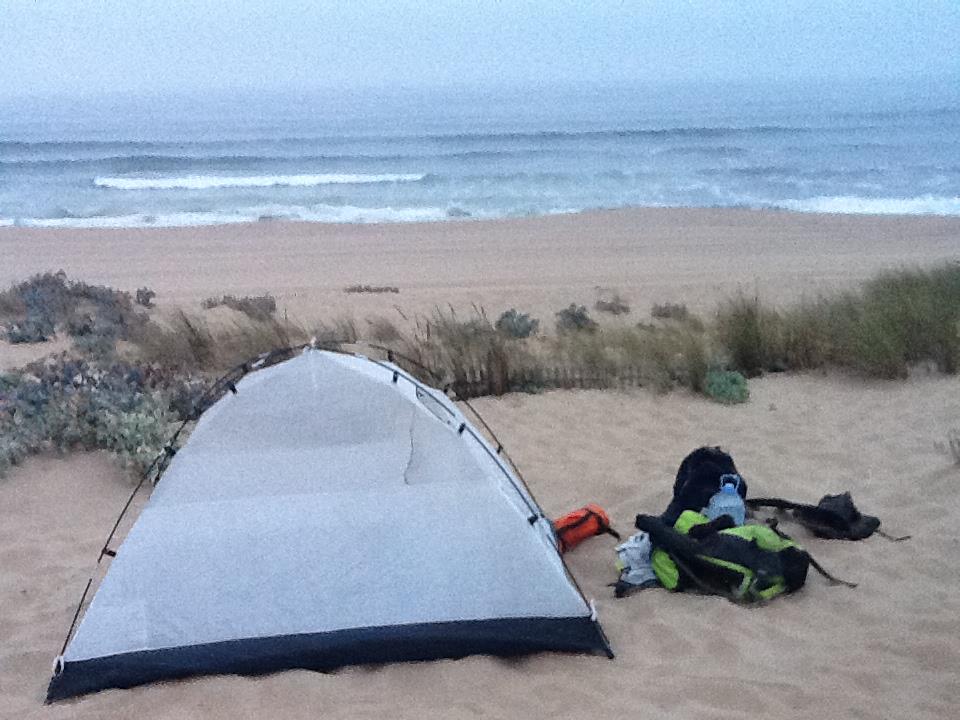
Wish you were here in Portugal. Lonely and melancholy tonight. For the past week, I have bodysurfed in the day, slept on the beach at night. I don’t feel lonely while surfing, riding the waves; the loneliness comes when the sun sets, and the couples walk off hand in hand
In France, most everything is forbidden, private, or impossible, usually all three. “Can I sit here?” “It is forbidden.” “Pourquoi?” “Dis table izze private.” “Can I climb this tree?” “No, it is impossible.”
Hung out in Lyon with a gorgeous German woman studying abroad there. Saw a guy with a Redskins hat, he told me the Heat had won the NBA Finals. This news did not make me happy, but the messenger of the news did.
Mark Twain wrote, “There is a friendly something about the German character which is very winning.” I agree. The difference from the French was noticeable the moment I crossed the border in Strasbourg.
Met a group from Jersey (not the state) on a train. They were going to a heavy metal concert. I don’t like heavy metal music. They had a friend called Jim Beam. After meeting him I decided to go with them. I left the concert when Lynyrd Skynyrd was playing “Free Bird.”
I feel invisible when travelling in the city. Not ideal for a life, good for a few days. Not a part of the city, not apart from it. In it, as an observer rather than a participant. An outsider by choice. I’m in some city, I forget the name, thinking of you.
Got to Hamburg a little after 2 p.m. on July 3. Watched a horse race. Met a group of 12 or so. They welcomed me with sandwiches, sausages, and lager. The next day I told them I had to get to Berlin, had no money. They paid for my fare. Gratitude.
Talked to a French bum today. Seems that all French bums have dogs, earrings, long hair. Renegades. Interacting with French people from the towns and cities drains me. But the bums are like mountain spring water from the Alps, refreshingly energizing, quenching that thirst for meaningful connection.
A trekker named Bruno saw me trying to hitchhike. He came over to me, laughing at the pitiful sign I had made. I told him my story, he told me to come with him. I hiked for three days with him. I slept in a cave, he slept in his tent. We wondered where the french flies go at night.
I and two friends drive down to Phoenix. I drop them off at the airport. As I drive off, after the hugs and goodbyes, I feel the type of sadness that comes from love. I park in a mostly empty lot and wander the city alone.
The one good thing about being alone in a city is the feeling you get that you are invisible. Not ideal for a life, but good for a few days. Not a part of the city, not apart from it. In it, as an observer rather than as a participant. A front seat to the insanity. I don’t mind being around a lot of people, as long as I know I’m not really among them. An outsider by choice. Outside of the CVS there is neatly cut grass and a couple of oak trees, I’m not sure which type. A man shouts at his two kids to get back in sight. They are frolicking on the grass, distracting a college-aged kid who is reading in one of the white chairs on the green grass.
“C’mon! You can’t go over there!” the man yells.
Phoenix would be ideal this time of year for a hobo. And a hobo I always will be. The nights are perfect, if you’re into doomsdays. I doubt it gets much below 60. Apparently in a couple years it’ll be 90 at nights here in the summer. The temperature is rising, the people are getting colder.
“You stay where I can see you!” the father shouts at his children.
So many sounds to pay attention to in the city. I hear that song that goes,
Sometimes I get a feeling / That I never never had before.”
It’s coming from the Lucky Strike bowling alley above the CVS. There is a song I can’t quite make out coming from the Verizon store next door. In the CVS that song “Bad Day” is playing. Another song is coming out of the Gypsy Bar above the Verizon store. A bus pulls away loudly from the curb to my left, past the square; the kids yell as they play tag, their dad yells at them to stop playing tag. Another bus zooms off. A group of four guys who would probably be considered hipsters walk by, smoking cigarettes sullenly. Tight jeans.
If I lived in the city I would drink too much coffee, probably start smoking cigarettes as well. Either that or I would work out or run obsessively, until I injured myself through overuse. Something to counter the lethargy and weariness I know I would feel after too long in this type of environment. Or I’d just bike everywhere. The city on the bike would be exciting: dodging traffic, recklessly fast in the center of the road. Some sort of physical adventure in the midst of all this concrete, all these machines. Something to feel like a human being again.
A junkie asks me if I have change. I give her 30 cents. Then I ask her how long she’s lived in Phoenix.








 Brian Leibold