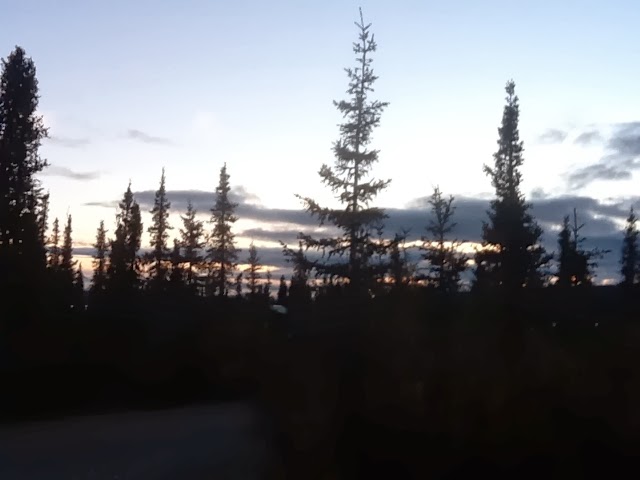
It’s 4 a.m., and I’m in the bathroom of Roper Lake State Park, outside of Stafford in eastern Arizona, sheltered from the cool desert night, taking what little comfort is available from the lukewarm showers here. I’ve got a cup of hot coffee beside me, in the same stainless steel cup I had at Legacy. I was a client there from February to June of 2016. Next week it will be Thanksgiving 2017, eighteen months later. I couldn’t sleep, raccoons kept coming into my campsite, trying to get at the food in my panniers. I’ve been on a bike tour for the last two and a half weeks. I’m living the adventurous life that legacy helped inspire me to live, but it’s not all warm showers and hot coffee.
It’s a long, slow road I’m on, one that often gets lonely. Slow and steady wins the race, I told myself as I pedaled two days ago up route 77, seven miles up 3,000 feet of elevation with 100 pounds on the back of my bike. What race? What victory? It’s hard not to feel deflated and defeated, to feel like a failure in life, to wonder about the futility of your own individual existence, when you wake up at midnight after three hours of sleep to the sound of raccoons scavenging through your food, and you spend ten minutes yelling yourself hoarse at said raccoons, which seem to be totally unafraid and go right on gnawing at the bag of instant rice you neglected to put away, thinking not even the coons would go for that, and now four hours later after being unable to fall back asleep, you take solace in the State Park bathroom, take a lukewarm and soap-less shower, and dry your hair under the hand drying machine, dreaming of sinking deeply into a plush comfy chair beside a wood stove fire and next to a bookshelf with hundreds of books, sipping hot tea and reading of some faraway arctic adventure as you sit in your comfortable home by the blazing fire with your steady, well-paying job and your loving and lovely wife and your sweet and adorable children. Instead, you are alone, a twenty-six year old man without a steady occupation, without a significant other, without a significant sense of your own self, leading a roving existence on the road to nowhere.
But no, every road leads somewhere. The dead end road leads to the wilderness that is the beginning of life. I’m on the road, craving this morning before dawn no longer for the temporary warmth of alcohol, my old and unforgiving mistress, but for the more permanent warmth and comfort of some place I can call my own, that I can call home. I say more permanent, for of course nothing is completely permanent. I’m on the road to recovery, and this road doesn’t end. It’s the road to rest and serenity, the road home. Home must be earned. Recovery is the victory that makes sense of this gnawing sense of defeat. Feeling like a failure precedes the success that comes when you recognize that to fail does not mean to die. You fail, and yet you live. One breath feels like a miracle, the next like your last gasp. And yet you live, and you fail, and you continue down the road.
For the last few nights, no matter how long or far I’ve pedaled, I haven’t slept well. I can’t find rest. I keep waking up, many times each night, wanting the sun to be up, wanting to be on my way. I’ve been averaging around 70 miles a day, between six and seven hours on the bike, at least a couple thousand feet of climbing, and yet I cannot sleep more than five hours a night.
“Our hearts are restless until they rest in You,” wrote Saint Augustine. Indeed. Rest in whom? “Via con dios,” said a Mexican-American from Stockton, California who I met at the Bylas rest area on the Apache reservation. Go with God. “You’ve got angels behind you on both shoulders,” he told me. In a couple hours, light will come, and I will go. With the wind at my back or in my face, with angels on my two shoulders or alone and feeling like the most forlorn wanderer east of the Colorado and west of the Mississippi. I’ll get on my bike and go east towards the New Mexican border. My plan is to go east until I smell that salty sea water again, in the swamps of Florida. And then what? I started this trip a few miles inland from the Pacific, biked seven miles and close to 3,000 feet up route 9, and then down again back to sea level into Santa Cruz. From there I biked down the coast of California, riding through the strawberry country between Santa Cruz and Monterey, climbing high above the cliffs of Big Sur, riding under the palm trees along the sunny coast in Santa Barbara and L.A, and pedaling down past San Diego until I was a few miles away from Mexico. I decided against crossing the border and went east instead, climbing out of the San Diego area, away from the sea, up to around 4,000 feet, and then plummeting back down into the low Sonoran desert, riding beside seguaro cacti, feeling the desert sun hot on my back. From the low desert I climbed again to the high desert, and I’ll do some more climbing once I get into New Mexico. Then I’ll have the confront the gigantic mass of land that is Texas.
There is much more country to see. I love the southwest, but for now I’m heading east, with all I need on the back of my bike. I may want more than I have, may crave all I don’t have, but in truth I lack nothing. Save the truth that will set me free? No, that is there too. That is here, too, and I’m on the road to find it.
“I think whoever I see must be happy,” writes Walt Whitman in Song of the Open Road. May I sing my song as I ride the open road. May I smell the happiness of juniper trees. May I take hold of this life and make it mine. My road, my life, my heart. I must find my heart, find where it sings and soars, where it weeps and groans, before I can give my heart away. I moan for man like Jack Kerouac. I weep for beauty like Everett Ruess. I’m clean and sober and learning to sing like the wind that brings me home, and I’m riding, yes I’m rolling, on down the open road.
I woke up before the sun rose at the campground in Lincoln City. I had gotten to the site late the night before. There had been no one at the window, so I didn’t pay for the site. I left before anyone could hassle me over that. It was before six in the morning, but when I got to the road it was still maddeningly busy.
This trip was a microcosm of the longer trip I had done from Montana to Arizona almost four years before. I experienced all the feelings I had on that trip, but in a shorter period of time. There was the same need to go, the same confused and unclear longings, the same restlessness, the same moments of doubt, the same feelings of loneliness, the same experiences of accomplishment and jubilation. The feelings were condensed on this trip; they did not have the time to fade that they would on a longer journey. They came in shorter but more intense bursts. For me, the more intense the feelings are, the more rewarding. When the road loses its intensity, it’s time to go home, if you’ve got one. If the road is home it’s time to leave home for a time, settle down for a week or two.
There was a streak of insanity to the journey up the Oregon Coast. Each day I rode for over ten hours. Ten the first day, almost fourteen the second, twelve on the third, and thirteen hours on the last day. Why? I had a week to do it, but I did it in four days, and when I was done I felt like I wouldn’t be able to bike for at least four more. I could have averaged more like eight hours on the road per day instead of twelve. But maybe I wanted to test my endurance, as I pedaled by the eternally enduring sea.
So the trip was a microcosm.
I experienced moments of doubt. What am I doing? Why am I doing this? These feelings are probably normal for any trip, but this one somehow seemed more purposeless to me than any. To go out while resolving not to return is one thing. I can understand that. But to go for a four-day out and back tour, even along a beautiful stretch like the Oregon Coast—that is more difficult to understand. Yet I was doing it. I felt like I needed to do it. I certainly wasn’t doing it for fun. There were moments of exhilaration, feelings of strength. But more often it was painful. The wind on the way north was relentless, that cannot be stressed enough. The going was slow. It was work more than fun, work without the weekly check. It is easy to forget how to have fun, and often times I forget. I was not taking an easy ride up the coast. I was booking it, a man on a mission, but what my mission was exactly, I couldn’t say. When I started going and the wind was relentless, I just grimaced. Very well then, into the wind. I welcomed the wind with wild grins contorted by pain.
There was something holding me in Oregon, something I felt was concurrent with my purpose as an individual, but its hold was getting looser. Still, I couldn’t go out if I wouldn’t come back. But as long as I returned I could still go. I wanted to push through all feelings without pushing any of them under. I felt as unsettled and restless as I ever have. I knew the best way for me to deal with those feelings was to keep moving, keep cranking up the revolutions and intensity until I could crank no more. On the trip, that worked; after the trip ended I felt exhausted and could barely move for a few days and then the restlessness returned with a vengeance, what had been holding me loosened its grip still more, and I ended up returning to the coast to do Oregon’s southern route.
I experienced moments of loneliness. On a solo trip, there will be loneliness. I would rather be alone and experience occasional bouts of loneliness than be with another and desire to be alone. The desire to be alone is usually stronger in me than the desire for a companion. When it is not, then I feel lonely.
I remember passing a party on the outskirts of Tillamook on Saturday night, heading back from the Washington border. I saw a woman and man kissing out on the deck, the woman in a bikini. The sun was setting. I felt the loneliness; there was nothing to do but ride on, bringing the loneliness along for the ride.
As I rode, I thought about why that particular scene brought loneliness. It seemed so much like the essence of something, some ideal I had always imagined but never realized. The vast sweep of sand stretching out below, empty of people, the magnificent and rock-islanded Oregon coast, the sun sinking slowly, and a young couple having found their place feeling a part of it all, seeing each aspect of the scene—the vastness of the beach, the power of the sea, the brightness of the sun—reflected in the other’s eyes.
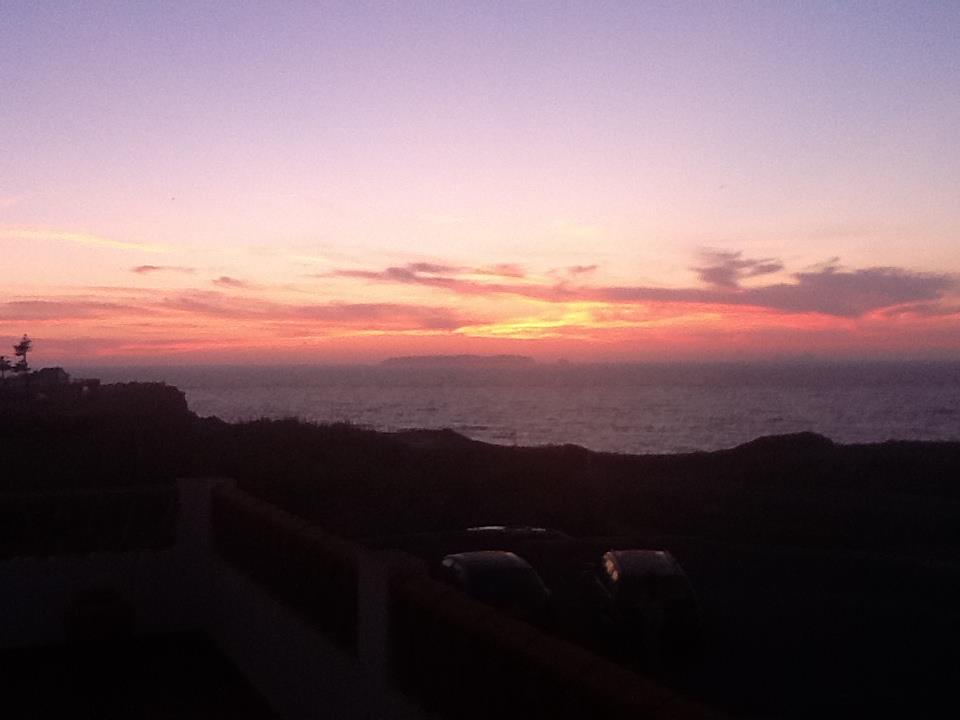
A small, for some reason nearly forbidden part of me felt lonely for that life. I knew I would never experience that much contentment, that much peace and easy happiness, for longer than a few hours or minutes. I cannot understand actively pursuing that life. I take those feelings as they come, but I do not pursue them. I have never been able to let myself experience them for too long. There has to be some conflict, some war with the self, some divine discontent, in order to live a creative life. So I tell myself, at least. My creative output would have to be my romantic sunset night. I too was a part of this scene, a part of it all, not least because there was no one else there with me. My aloneness made me an integral part of what a companion might take away from. So my rationalizations went. As I continued moving, the thoughts slipped away like the sinking of the sun. I kept moving as it started to get dark.
But that was the following day. This day was still Friday, one of the most physically difficult days of the trip. I don’t know how to write about the actual biking. I just kept pedaling until I got to where I ended up, which was the brilliantly named town of Seaside. It was painful; I was in despair most of the time; I cursed the cars and wind; I belted out Dylan and Zevon again; and I talked to a long-bearded man who was walking from San Francisco to Seattle. I thought it was strange when he said he was walking. We were in the town of Tillamook, renowned for cows and what comes from cows, and we were both walking . I could see that he was walking. That was evident. I was also walking. Later when riding it hit me that he actually meant he was walking the coast, up to Seattle. That was a more impressive feat.
The long-bearded man was from Flagstaff and wearing a NAU shirt; apparently, he had spent some at the Wednesday community lunch offered at Prescott College. That was quite a coincidence. When I said I went to Prescott College, he said, “One of them, huh?” I wasn’t quite sure what that meant, but I answered, “yes and no.” I didn’t explain further but if I did I would’ve said,
“I go to the school but I do not feel like ‘one of them’, or one of anything, save the human race occasionally. And though I like being outdoors, and most people at Prescott College like being outdoors, that alone does not make me one of them. In fact, that is one of the reasons I find it hard to be there. How do I distinguish myself when there are so many others with the same interests, the same passions. The need to stand out has always been much stronger in me than the need to fit in. However, my natural inwardness does not usually allow me to stand out, except when writing takes my place, and the words are authentic and passionate. And how does it take my place? What place is there to take? Who is authentic? What is passion if invisible? And where do I go if writing takes my place? Who goes? Who writes? Who knows? Go home! You long-bearded expatriate from Flagstaff! Go moan for man! Go eat the famous Tillamook cows! And how authentic is it when it takes my place? You ask. As authentic as a place holder? Have I placed my trust in images and distorted facts? Even you, yesterday you had to ask me where it was at? I couldn’t believe after all these years, you didn’t know me any better than that?”
And then the long-bearded expatriate of Flagstaff would probably be mightily confused because indeed I had just met him less than two minutes ago and had not known him for all these years, unless he knew the Dylan song and then perhaps we would have joined in a duet, and after finishing and radically butchering most of the song I would’ve said, ‘Let’s go, I’ll walk my bike to Seattle with you’ and we would have taken off for the road north and I would never have gotten back to school because I’d be walking up the coast with this man who would call me Alias while I would call him Augustine.
But none of that happened because I just answered, ‘yes an no.’ We talked for a few minutes, I wished him luck, then I took off again for the Washington state line.
The wind was howlin’ and outrageous but I just put my head down and pedaled slowly and steadily until I made it to Seaside close to sundown. All the tent sites were equally as outrageous in price as the wind was in power, so I camped by the side school which I hoped was closed for the summer. Anyways it was Friday night. I ate a burger in a fish joint and then went and saw a movie by myself: Spy. It was very funny but I nearly fell asleep during it for exhaustion.
I slept without issue that night by the school, woke up late, and went to a continental breakfast at the Quality Inn. Illegal! You rotten vagrant! You might roar with scorn and derision in your eyes, to which I probably shrug my shoulders and give no response. Though I was itching to get back to the road, now being only about twenty miles from the state line and the turn around point and the wind at my back, food was necessary, and also free, if illicit. No issue at the Quality Inn either, and some quality eggs, sausages, granola, blueberry muffins, and I forget what else. On previous trips I had once done this often without shame, feeling I deserved it from the riding I was doing, but I was starting to feel slightly uneasy. I was older now, nearing the age when other people were making money, maybe even sleeping at hotels and getting the continental breakfasts with good consciences and emptier wallets. Well, regardless, I was starving and felt I had the right to the food that would probably been thrown out anyways. I wasn’t causing anyone any pain. Entitlement! Rationalization! You might roar with scorn and derision in your eyes, to which I would probably shrug my shoulders and give no response, though perhaps I would secretly agree.
So I ate and went back on the road, where I would ride up to Astoria and get pummeled by wind from what felt like every direction as I rode over the bridge to Washington in order to promptly turn around and head back over the bridge to Oregon. Insanity! You might roar, enjoying yourself now with glee, to which I would openly and wholeheartedly agree, with a shrug and perhaps a wild yodel, now with the wind at my back.
I had planned on starting from Eugene but there wasn’t a place to sleep. Even the Wal-Mart was not an option. No overnight parking, a sign said. I kept driving west towards the coast. The first town off the 101 was Florence. I parked by the beach and slept in the car, the windows down so I could hear the wind and sea outside.
I woke up as the fog was clearing, changed into a swimsuit and ran up the dunes that separated me from the sea. I jumped into the ocean and got out right away. It was low 50’s in the water and not much warmer outside. I got back into the car. I wasn’t sure if I was going to start biking that day, so I had spent a couple hours trying unsuccessfully to do some writing in the library. When I finally decided to get going, it was almost noon, and the wind had picked up in earnest. It usually started about 10 in the morning. I wanted to bike down to the California state line or up to the Washington state line. Washington was further, and I had a few days, so I headed north.
I parked the car and got my panniers ready in a Fred Myers. I saw signs here that also said No Overnight Parking, but I thought I’d risk it. There wasn’t any better place to park. I was feeling somewhat paranoid. I didn’t know anyone, and I just wanted to get on the road. I didn’t want anyone to pull up and ask me what I was doing or tell me that there was no overnight parking here. Usually, I enjoy the feeling of being a stranger, unknown and passing through, but only when I’m actually passing through. Be in the same place for too long and you might start to get recognized! Better to go unrecognized. Invisibility has always been the most desirable superpower to me. As a traveler, invisibility comes naturally. You blend in on the outside while still remaining unblended on the inside. Actually, often times you don’t blend in on the outside. The weight on the back of my bike would clearly distinguish me as an outsider. Very well, an outsider is usually what I prefer to be.
I quickly threw in some food and clothes in the panniers, not thinking all that much about just what I was throwing in, loaded on the tarp and sleeping pad, checked for a second to see if I had everything, and started pedaling. It was about noon, and I moved slowly for the first few miles, the same way I moved for most of the journey north. I hadn’t reckoned with the wind, which was strong and blowing directly into my face. I would also have to get used to the weight, which was 60 pounds at the least and probably more. Hunter Thompson writes in The Rum Diary, “I had a flash of something I hadn’t felt since my first months in Europe—a mixture of ignorance and a loose, ‘what the hell’ kind of confidence that comes on a man when the wind picks up and he begins to move in a hard straight line toward an unknown horizon.”
This is how I felt. Instead of despairing over the wind, I felt reckless, adventurous. I was pedaling against a powerful force; the wind was brutal, punishing, unforgiving, and indifferent to all comers. So be it. I would rather make my way against the indifferent wind along the rocky splendor of the Oregon Coast than try to make some legal tender by going up the actively cruel ladder of human production and consumption.
The miles were hard-earned from the get-go. Highway 101 climbs out of Florence before it drops down to Yachats. So I climbed. It took me a long time to get to Yachats, maybe three hours to go the 24 miles, maybe more. I realized in my paranoid rushing in the Fred Myers parking lot, I had forgotten a phone charger. I wanted to keep my phone charged in case I decided to go a different route or to look up things to do in the towns I passed through.
John owned the ramshackle electronic shop in Yachats, cords and wires all over the place. He only took cash. ‘The grocery store gives cash back,’ he told me. ‘You can pick up a snickers.’ I realized that was exactly what I craved, so I went to the grocery store next door, picked up two snickers and an espresso drink. It was a habit I would continue through the four-day trip, during which I ate horribly. Then I went back and talked with John about the wind. That was really the only thing on my mind. The wind has that way about it, clearing the mind of anything else but itself, the force you’re biking into. John told me that the difference in temperature between the coast and the inland was as much as forty degrees this day. It stayed that way into the weekend. 60-65 on the coast, close to 100 inland. Apparently, this difference was the cause of the ferocious wind, my brutal enemy on the way north and my good dear friend on the way south. He said some other things but my mind deemed them too scientific to understand.
I wished him good health (he was just getting over a flu) and then again it was to the road. I had gotten over one mighty hilly section and for a while the terrain was relatively flat. I had passed one woman a few miles before Yachats who looked like she was in utter despair, her head in her hands on the side of the road. I felt like if I stopped it would be a while before I continued, so I didn’t stop and give her the support I couldn’t have given her anyways. Now there were bikers going the other way, with the wind, looking exuberant and light. The opposite of me. They would wave happily at me and I would grimly put up a hand. There were many of them going the other way, but in my days on the road, that one woman in despair was the only one I saw going north against the wind.
I had driven this route the previous December, when I was heading from Alaska, where I had spent the fall with my cousins, to Arizona, where I was going to start college. I remembered staying the night at the Dublin House in Yachats and then getting off the 101 the next morning, driving to Eugene and getting on the I-5. Back then, somewhere north of Florence and south of Lincoln City, somewhere around where I was biking now, I had jumped into the ocean, though both the water and the outside temperature were in the 40’s. I had written this a few weeks afterwards,
“There was a definite feeling, on this December day on the Oregon shore, that I was not an important part of this scene in any way. Whether I or anyone else was here, the sea would remain, sometimes calm and sometimes violent, the waves would crash, the islands of rock and trees would stand. It was a reassuring reminder, the patient indifference of the lively inhuman elements.
In the summer, I’m sure the beach would have swarmed with men and women and children. But today it was empty of people and full of life. I wasn’t distracted by bathers and surfers, and I was able, when I paused for a few moments before I got to the car, to appreciate the beauty that surrounded me—the massive rock islands that stood to the south, the light Irish drizzle that fell from the low grey sky, the seagulls that soared north with the coastal winds. The realization that I was irrelevant to the scene was a simple one, but it freed me from the narrowing self-absorption that comes from driving alone, one of many poor souls detained in cars on the endless road, with only billboards for company, brought me back to the larger open world around me, the sands and trees and sea, including me but not requiring my presence.”
The self-absorption that driving brings does not come as much when biking. Because cycling is a physical struggle, the mind has no time to sink into self-pity or self-absorption. It must be in tune with the body, focused on pushing forward. When the body is not moving, the mind is free to do what it pleases, to be absorbed with itself and unresponsive to the outside world. Biking allows for another type of absorption, an absorption in movement and activity. On the coast, I was able to be present and responsive to the world of rock and sea and sky and trees. I was forced to be present; I could not help but be where I was. If my mind drifted at all, the biking would quickly become more difficult. The body needed the mind in order to persevere. The coastal winds added another element that required even greater presence. To ride north on the Oregon coast in the summer is a long and arduous lesson in patience and acceptance. I had to let go of any idea of myself as strong, as physically powerful. I was no match for the wind. To work with the wind at all I had to go slowly. There was no other way. I had to put my head down and endure the pain without expending unnecessary energy.
I continued on into the night. Each time I wanted to stop for the night, I told myself to keep on for just a few more miles. Who knows why? I simply wanted to keep going.
I was also in a stretch without many places to camp for the night. Newport was fifty miles from Florence and Lincoln City was eighty. Between the two, I don’t remember seeing any places to camp other than RV campgrounds, where tent sites are exorbitant, up to $40 a night. One of my rules of the road is never paying to sleep if I can help it. If I do have to pay, the maximum price I am willing to spend is $6, the price of a tent site in the national forest and state park campgrounds. I was also riding through a busy stretch. This first day on the road was a Thursday but it might just as well have been a weekend day. The highway stayed like this all the way up from Florence to the Washington State line and back again. The noise was at times unbearable for me, and so I put in headphones, diluting my ability to be present. But most of the time, even when I was riding right next to the ocean, I could not hear it or smell it because of the noise and exhaust from the cars. So I listened to Bob Dylan, belting out his Blood on the Tracks album.
“But me I’m still on the road,
Heading for another joint.
We always did feel the same
We just saw it from another point of view
Tangled up in blue”
Or Warren Zevon:
“Gridlock, up ahead
There’s a line of cars as far as I can see
Gridlock, goin’ nowhere
Roll down the window, let me scream”
Finally, past 11, I pulled into a state park in Lincoln City, about eighty miles from where I had started in Florence.
It started when I woke up and heard the fly in my room. I did everything I could. I read, I meditated, I sang, I did push-ups, I typed on the keyboard, I even tried praying to relieve the burden of this fly. The fly was still in the room. Sometimes it would stop flying and land somewhere. These were peaceful moments. Most of the time, though, it flew around. Those were hostile moments. I left the house for a while and forgot all about the fly. When I came back I remembered. It was still alive and flying! I tried a few times to kill it, but I could not manage to do so. It’s hard to kill a fly by simply clapping your hands. Flies are elusive and exasperating insects.
I could have left again, let the fly buzz around until he got tired or died. I couldn’t do it. This was my house, not the fly’s house. It was cold and rainy, a day to sit contentedly inside and watch the rain fall down, not a day to be outside. But I could not be content with the fly in the house, it brought me to the end of my patience, I really couldn’t stand it. I couldn’t stand it or sit down with it in the house. I could do nothing but become increasingly irritated. I sat and tried to read again. Nothing doing. I could do nothing but think about the fly. It had completely taken over my attention. There was nothing else in the world but the two of us, the fly and me. I thought about why the fly had come. There had to be a reason. Flies don’t just appear out of nowhere without a reason. I thought about it some more and could not think of one single reason why this fly was in the house.
Was there no reason for this fly? If there was no reason for this fly, then did that mean there was no meaning in this situation? The dread!
The apparent meaninglessness of the entire situation filled me with horror and forced me into action. The meaning here would reveal itself, I was sure of it. I needed to be sure. I would learn what this whole thing meant by killing the fly. From the death of the fly the meaning of the situation would come to life. But first, the fly must die!
I went again into action. This time the fly would not get away. I followed him into the bathroom and shut the door. There, let him fly around in there, I thought. That settles things.
Before too long, I had forgotten about the fly and settled in to read. Sometimes I would stop reading and bask in pure contentment: the peaceful stillness of the day, the mix of rain and snow gently falling on the window, the warm cup of tea in my hand, I needed nothing else. The simple pleasures of life! What else was there to need? Needing was for unhappy people, the ones who were always intolerably irritated with absurdly minor issues.
Intolerable was the word. The irritability of other people always exasperated me to no end. How could anyone be so irritated! And how truly minor the issues were that made them so upset. I didn’t see a bit of sense in it. There was no meaning in it at all. What disturbed everyone all so much was as pointless as a fly. I was glad to be rid of those constantly irritated and discontented people, glad to be rid of all my burdens and worries. As the cold rain fell down on the window outside, I felt arise within me the warmth and sunlight of true contentment!
Soon, having drunk a pot of tea, I found I needed to go pee. Serenely, I opened the door and walked in. Immediately the fly flew out. How quickly the mind forgets of its troubles!
I forgot right away about having to pee and went to chasing the fly for a second time. Again, I tried to trap it in the bathroom, but it was too smart for that, so I was forced to look for another way to remove the loathsome pest from my presence.
I chased it for a quarter of an hour around my 350 square foot room. In such a small room, with such a small insect, such a vast and endless problem! It was madness, and it needed to stop. I chased it above the sink, I chased it under the table, and finally I chased it to my bed where it stopped flying.
I stood on the bed. The fly was in the far corner, on the ceiling, and I could tell it was afraid. The fear in the room was palpable. I stood there and waited, my entire attention fixated on the fly. This time it would not get away, I was sure of it. I thought about what I would do if it got away. I could not fathom the possibility. It was simply unimaginable to me that the fly would live for another minute. I pushed the thought out of my mind.
The fly took off again, while I clapped frantically like an epileptic at a piano concert. Did it hear my clapping? More to the point, did it understand the intent of my clapping? Above all I feared that the fly was under the misperception that I was clapping in support of it. On the contrary! I despised its very existence! I wanted to nip that misunderstanding before the whole situation got completely out of control. I wanted nothing more than to end this fly’s life, to kill its buzz, and not to give it my support by clapping, that senseless human form of expressing non-verbal approval. But the only way I knew to kill it was to clap it between my hands. That would be the last clap and the final curtain. Whatever misunderstanding my clapping might bring about would not matter after the fly was dead.
With the rage and fury fitting for such a critical and crucial moment, I roared at the fly,
“I clap to kill you, not to praise your efforts!”
Still, the possibility that my intent might be miscommunicated was too grave a threat. The complexity of the situation made my head hurt. I wanted the fly to know I was trying to kill it, and not be under the misperception that I was trying to express to it my approval. I wanted it to be in fear in its last seconds, not basking in unwarranted and nonexistent admiration.
I picked up a book. This way there could be no misunderstanding. I would kill the fly by use of the book. I tried that for a while without success. No, that could not be the way. I could clap the fly faster than I could hit it with a book. Anyways, what if the fly imagined that being killed with literature was more flattering than being killed by flattery? Misunderstanding be damned! It did not matter how this fly died as long as it was very shortly dead.
Well, what can I say? Something changed in the manner of my pursuit. I became more focused, more driven. I readied myself, I zoned in on my target. It became more of a chess match and less of a bullfight.
The fly took off away from me, and I took a desperate lunge. I clapped one time, opened my hands, and saw the fly fall below me to the ground. It twitched once, twice, three times, and then it was still. It would no longer torture me with its insane buzzing.
I took a deep breath and sat down again. Outside everything was the same. The mix of rain and snow was still falling gently on the roof, the trees shook gracefully in the wind, and the deer and coyotes roamed the hills. I waited for the contentment to come back, the way it had been hours before when I had forgotten about the fly in the bathroom. I waited to bask in the glow of a task completed, a job well done.
But something was not right. Why did I not feel more alive now that the fly was dead? Where was the freedom from every care, the loosening of all my burdens that I was sure would come when the fly was gone? I was free from the fly’s odious existence, so why did I not feel free? I had been sure the reason the fly had come into my life was because of the freedom I would feel after its death. But I felt no freedom! The dread!
In the fly’s absence I could still feel its presence. In death its hold on me was even stronger than it had been in life.
I spent the fall before I started at Prescott living with my cousins in Kenny Lake, Alaska, 40 miles south of Glenallen and 220 miles northeast of Anchorage. I spent my time at their place chopping wood to keep warm at 30 below, doing odd jobs for neighbors, snowshoeing through the woods, reading, writing, and watching Lord of the Rings with my three younger cousins. They were three of the best months of my life. When I had worked enough odd jobs that I had money to travel, I did that. One day I decided to drive to Fairbanks.
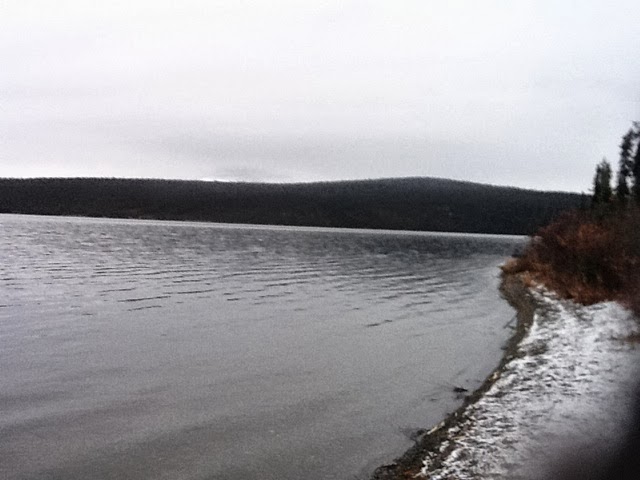
Driving from Glenallen, I wasn’t sure where I was going to stop for the night. Most campsites were closed for the winter, so I thought I would just pull off the road and sleep in the car somewhere. There was a sign for a campground by a lake, though, that looked like it might be open, at least it was not gated off, as most of the campsites were. I pulled in, drove the loop. There was not a soul in the 50 plus site campground. The lake, Paxson Lake, was run by the BLM, a governmental organization, so technically it was probably closed. This was the time of the government shutdown. But the shutdown seemed so totally irrelevant here, so far removed from this campsite by the lake, surrounded as it was by mountains and trees, that I never expected a ranger might come to kick me out. A ranger did come to kick me out, but not until the next morning, so I still was able to enjoy the stillness of the deserted campsite for the night. I set up my tent and then walked around gathering dead spruce wood for a fire. I laid the wood in a pile, took off my boots and socks, digging my bare feet into the rocky sand, and leaned back against the hard wood.
Good. Wood gathered, tent set up, fire burning. What else? Food? Why not. I cut up my quarter pound of sausage, put the pieces on a stick, and stuck the stick in the fire. Cut open a bagel and stuck it in the fire. Got my steel cup, filled it up with water, and stuck it in the fire. Waited. Leaned back against the wood, looked at the sky, darkening now. Took the sausage and bagel out. Put the roasted sausage on the toasted bagel, added some cheese which instantly melted from the heat of the bagel. Took the cup out and added a teabag. Dinner. Good. Anything else? A book? But that would require standing up, and the fire was so warm. Something of an issue, but one that could be overcome. Simply required an exertion of will. I could do that, I could stand up. I stood up, and ambled gingerly in my bare feet to the car, found a book, went back and leaned my back against the wood again. Edward Abbey would be my companion for the night. And a good companion he would be, better than many, than most, his voice truthful, passionate, alternately loud enough and silent enough to be heard. Often though the fire would distract me from his righteous and pure polemics, and I would put the book down and stare at the flames, thinking nothing, not at all oppressed by the beauty of the night, not at all lonely, but feeling liberated in the aloneness, which was not mine as loneliness would have been. Not my aloneness, but the aloneness. It had been here before I came, and it would be here after I left; I joined it, the aloneness, become a part of it, more a part of it than I would have been if I were not alone.
Unhappiness here did not make sense. The trees were happy where they were, the rocks on the shore were content that the water in the lake flow gently over them, the animals pleased to roam and find food. It made sense only to conform to the contentment of these natural living beings and life-giving forms, and it was the only type of conformity that made any sense. Part of me dreamed that life could always be this simple, this easy, and maybe it could. But perhaps, another part of me thought, it is the difficulty and monotony of everyday life that make the rare times of easy happy simplicity when there is no conflict between the inner and outer life, when there is no distinction made between the two, when you are a part of the outer and the outer is part of you, so meaningful. A pool of water in the desert wouldn’t be an oasis if the desert were filled with water.
It snowed during the night, 2 or 3 inches. I had fallen asleep by the fire and moved to my tent after the fire burned down and the cold woke me up. In the tent I slept soundly and warmly and didn’t realize it had snowed until the morning. I was in no rush to leave so I stayed in the tent and read in my sleeping bag. After an hour or so of this, I heard strange motorized sounds coming down towards the lake. I heard the strange motorized sounds stop by my tent, heard someone get out of the car and shut the door, heard someone ask if anyone was in the tent. I feigned sleep. She asked again, I answered. She was pretty nice about it.
“This campsite is closed, I’m going to have to ask you to leave. The governmental shutdown and all. You can get dressed and everything first.”
Although this ruined my plans, which consisted of staying in my sleeping bag doing nothing, it was alright. I would press forward. The Denali Highway was a few miles ahead, and perhaps not yet closed for the winter. My Uncle Peter and Aunt Patty had recommended driving on this road, which led to Denali National Park, but it was mostly unpaved and always unplowed. If it had snowed heavily during the night the road would be impassable.
At the entrance to the road, there was a sign which read “Travel Beyond This Point Not Recommended,” and a second sign which warned that wind, snow, and other perilous weather conditions were almost always present. In other words, only a fool will keep driving. More to the point, you, driving the 2003 Subaru Forester, are a fool. Do not continue, turn around, you have never driven in the snow, have you? No, of course you haven’t, which is why you consider continuing. Stop considering it. There are winds on this road which have flipped cars twice the weight of your little utility vehicle, conditions which have put the fear in drivers infinitely more experienced in the snow than you are. I listened for a minute or so to the signs, physical and otherwise, and then went beyond. There was a campsite about 20 miles away, Tangle Lakes, surely closed, that I would drive to. I’d turn around there, if I had to. On the way, I saw a caribou in the middle of the road. It paused for a few seconds and looked at the car, then turned and ran, stumbling a little. Perhaps it was hurt, hungry. I cursed myself and the noise of the car for frightening it and making it use energy to scamper up a hill, energy it might have needed to find food. I could have watched it from afar and waited until it was out of sight before continuing. As it was, I made it act other than it would have had I not been there. I changed the natural flow of things, and not for the better. When does human interference ever change things for the better?
It started snowing when I was about halfway to Tangle Lake. Not too hard, but definitely snow, not rain. Cold enough outside for it to stick. For Alaska, a minor storm. Fairly windy, snow accumulation if the pace kept up of maybe half a foot by the morning. Nothing to get worried about. In Washington, everything would be shut down. Then again, in Washington everything was already shut down, snow or shine. The governmental shutdown and all. At Tangle Lakes, I stayed in my car for about half an hour, thinking through the options, which were two. Press on or go back. West or east. Right or left. The first had the ring of adventure to it. Press on, in a general westerly direction, through snow and wind, through some of the wildest country that man has yet profaned with a road, seeking adventure. Go back? Retreat? That definitely was not adventurous. Not an attractive option. No romance to it at all. So I turned right, towards adventure, the west, towards a fair chance of fatality. The snow, as if in answer to my foolishness, immediately started to come down harder, the wind picked up. The weather report that Patty and I had looked at the day before had said that winds would be gusting at over 70 miles an hour. Travelers were forewarned. After 3 or so miles of driving under 10 miles an hour, I turned around. A couple more miles more and I might have had trouble doing even that. Later, when I returned to Kenny Lake, Peter told me that the Denali Highway had been closed for the winter that very day. I was probably the last one on the road.
Back on the main road to Fairbanks, I stopped in and got a cup of coffee at a cafe. Just to see the reaction, I asked the old man there if he thought the Denali Highway was passable. He looked at me for a second, looked outside at the snow coming down hard, and looked back at me.
“No. Not a chance. Stay on the main highway there, my friend.”
I did so, heading up to Fairbanks, 3 or so hours away, which for some reason I wanted to see. To see the difference, maybe. See how I would fare in a city for the first time in a month. I thought, mistakenly, that after a few weeks of living with my cousins away from the land hungry evil twin brothers of progress and industry, living in the shadow of some of the most majestic mountains in the world (Wrangell-St Elias Range), I might better be able to handle the brutal meaningless sounds of the town and city. And if I could not, then there was the library. I could always retreat there. There was a university with stacks and stacks of books. And there was always the car. And the road. The car on the road, departing. I could leave if I couldn’t stay. I arrived at night on Tuesday, after picking up a couple of not so reputable or respectable but nice enough hitch-hikers (one of them started singing when I put on James Brown, “Man, I haven’t listened to this since I was a kid. Do you got It’s A Man’s World?” so we sang it together.) I dropped them off so they could look for drugs and then parked my car and slept surprisingly well in the parking lot of the 24 hour Wal-Mart. Before I fell asleep I wrote a poem, just one of probably thousands of Wal-Mart parking lot poets all over the USA, down on our luck.
I stayed in Fairbanks the whole of Wednesday, mostly in the university library reading the poet Robinson Jeffers, leaving the library once to go buy some books at a used book store. Libraries and used book stores, the shining beacons of civilized life, which have saved many a wanderer, salvation for those who don’t know why they are there at all, why they aren’t climbing a mountain, riding waves in some sea, wandering in some desert. Jeffers, from the poem “De Rerum Virtue”:
“One light is left us: the beauty of things, not men;
The immense beauty of the world, not the human world.
Look—and without imagination, desire nor dream—directly
At the mountains and sea. Are they not beautiful?”
Or as the Grateful Dead put it:
“Let it be known there is a fountain
That was not made by the hands of man.”
I left early Thursday morning, left the land of men, returned to the mountains; left the dangerously hopeless dream (or nightmare), returned to the starkly beautiful reality. In the words of one young unpublished poet, I left the land of rules and returned to the land of reigning silences, left the land of fools (myself included, no less than the rest), back to the land where there are no disguises. Driving from Fairbanks, I started to feel excited, more alive. I had felt dull and lifeless in the library, though the most refined thoughts of the greatest writers this world has known sat in books all around me. Driving now, Zevon on the stereo, I switched on the cruise control and watched the sun rise in the rearview mirror over some hills (mountains in any eastern state, hills in Alaska). The sky was almost completely clear, a rarity in perhaps any part of Alaska at this time of year, though I can’t say that for certain, having not traveled over the one-thousandth part of the state. Alaska is so massive, and with such wildness, such beauty. I wanted to climb every mountain I passed. But the Alaska Range, close to Denali National Park, was about 100 miles ahead of me. I decided to park my car somewhere ahead, in the range, and, while the sun was still shining, climb until I had cleansed myself of civilization by a process of detoxification. I parked the car shortly after a sign reading Wind Area. The sign had it right; the wind was powerful, though not quite as strong as it had been on the Denali Highway. Besides, the mountains were irresistible to me. Wind or no wind, I would climb.
In Chamonix. Planning to hike the Tour of Mont Blanc, a 200-kilometer loop. Passed a hotel called Le Gite Vagabond. Tempting, but too expensive, so I slept on a bench outside the train station in the shadow of Mont Blanc instead.
I am writing you from a train filled with Aussies. Paris to Lisbon, Portugal; a long ride. I was in Paris for a day. I didn’t know what to do so I went into a movie theatre and watched Spiderman.
Dublin is as dirty a town as they claim, and as beautiful. I drank Guinness today and sang dirty old town with an old drunk. I watched cricket and noticed that cricket players are faster than baseball players.
I got to Madrid hours before my flight back to Ireland. I lay down shirtless outside the airport, as I had done in Phoenix a few months before, and did nothing. Much hotter here than it is on the coast. The temperature rises, the people get colder.
London is packed for the Olympics. My brother and I came over from Ireland to watch the Marathon. I retreated to a bookstore and read The Perks of a Wallflower and then napped in a park. Rolled up my jeans, took off my shoes and socks, watched Londoners get drunk.
Somehow I made it to Berlin to meet my uncle, though I had no money. Strangers can be kind, when you aren’t in France. Here, I biked in the downpour, looked at portraits of smooching dictators and gorged on continental breakfasts. I took some food for the road.
Got robbed in Nice. Took the train to Marseilles, hid in the bathroom. Spent the week trying to get a new passport. I sat in the US consulate reading the dictionary and copying down words I liked.
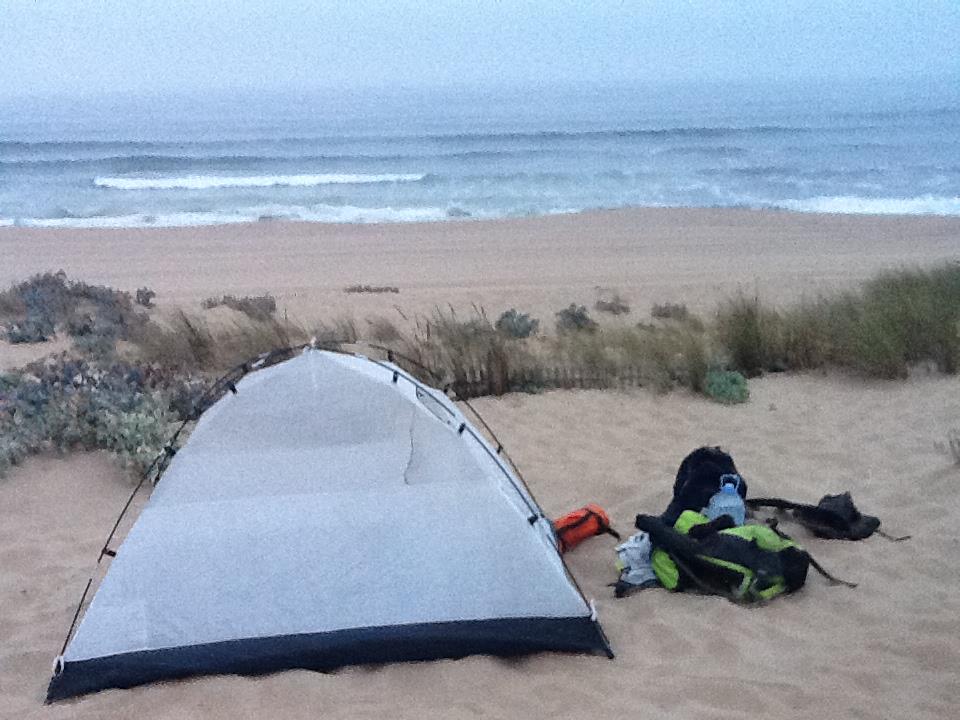
Wish you were here in Portugal. Lonely and melancholy tonight. For the past week, I have bodysurfed in the day, slept on the beach at night. I don’t feel lonely while surfing, riding the waves; the loneliness comes when the sun sets, and the couples walk off hand in hand
In France, most everything is forbidden, private, or impossible, usually all three. “Can I sit here?” “It is forbidden.” “Pourquoi?” “Dis table izze private.” “Can I climb this tree?” “No, it is impossible.”
Hung out in Lyon with a gorgeous German woman studying abroad there. Saw a guy with a Redskins hat, he told me the Heat had won the NBA Finals. This news did not make me happy, but the messenger of the news did.
Mark Twain wrote, “There is a friendly something about the German character which is very winning.” I agree. The difference from the French was noticeable the moment I crossed the border in Strasbourg.
Met a group from Jersey (not the state) on a train. They were going to a heavy metal concert. I don’t like heavy metal music. They had a friend called Jim Beam. After meeting him I decided to go with them. I left the concert when Lynyrd Skynyrd was playing “Free Bird.”
I feel invisible when travelling in the city. Not ideal for a life, good for a few days. Not a part of the city, not apart from it. In it, as an observer rather than a participant. An outsider by choice. I’m in some city, I forget the name, thinking of you.
Got to Hamburg a little after 2 p.m. on July 3. Watched a horse race. Met a group of 12 or so. They welcomed me with sandwiches, sausages, and lager. The next day I told them I had to get to Berlin, had no money. They paid for my fare. Gratitude.
Talked to a French bum today. Seems that all French bums have dogs, earrings, long hair. Renegades. Interacting with French people from the towns and cities drains me. But the bums are like mountain spring water from the Alps, refreshingly energizing, quenching that thirst for meaningful connection.
A trekker named Bruno saw me trying to hitchhike. He came over to me, laughing at the pitiful sign I had made. I told him my story, he told me to come with him. I hiked for three days with him. I slept in a cave, he slept in his tent. We wondered where the french flies go at night.
Help me to hear the song
brokenness sings
on its way to hope.
Help me to grasp the hand
loneliness offers
on its way to union.
Help me to trust the tears
loss releases
on its way to peace.
Help me to be the tunnel
grief travels
on its way to love.
Let this loneliness be a crucible in which a genuine maturity is forged, rather than a noose that continues to strangle my natural capacity for joy.
Let this loneliness be a hunger pang, a groan of desire for the real food of communion, rather than an oddly comforting bone I refuse to drop because it’s all I’ve got.
Let this loneliness be a shrill call to the deeper Life for which I long, rather than a dead animal I strap on my back every night, each night more oppressive than the last.
Let this loneliness be a north star that guides me to the Inn where True Love is born, rather than a bolted door that keeps me locked in a war of hatred with myself.
Grant me the faith to believe that Life is stronger than death, and Love deeper than hate. Let me never abdicate my house to the hungry thieves that would rob each room of its particular treasure, and curse the one who lives inside as worthless, no more than an empty purse, a justly abandoned figure on a severed fragment of scorched earth. Let the figure refuse the facile fabrication of an identity based on feelings of uselessness and ugliness, but rather let these feelings pass. Let them move through the physical body like a river, however muddied, moves through a canyon, rather than harden into a dam of mind-made steel. O God, Creator of all that is good and real, without whom there can be no unity, let the faint beginnings of light seep through the cracks of my divided self and thaw the ice congealing in my heart. Bring me back continually to the depths of your peace in the present moment, and do not let your sun come up over the hill to shine through my window while I am lost in a state of war, with myself or with the world. Let me face each state, whether familiar and painful or strange and painless, with courage and compassion. Do not let me act from an unconsidered sense of lack, but let me look directly through that hole, like one whose right eye through the tiny lens of a telescope sees with a jolt the vast sky lit up at night, limitless and unimaginable.